Cricket Australia has announced major changes to the Big Bash League contracting system that could increase the earning potential of Australians. The board will scrap the overseas player draft and return the competition to a direct signing system, allowing franchises to negotiate with local and international players.
The overseas draft, which was introduced in 2022, gave BBL franchises a structured way to recruit international players. However, it raised concerns about the value of local players. The contracting embargo will lift on August 27, allowing clubs to negotiate directly with players and complete their squads.
Big Bash Scraps Overseas Draft to Boost Australian Players
The Big Bash League has scrapped the overseas player draft and returned to direct signings for domestic and international players. Clubs no longer need to sign overseas players and can build their squads entirely with Australian talent. However, each club can still sign up to 3 overseas players.
Under the previous system, clubs had to sign or draft 2 or 3 overseas players under set salary bands. At least 1 had to earn more than $300,000 in the BBL and $90,000 in the WBBL. The new rules allow clubs to use that salary space on Australian players.
Big Bash League general manager Alistair Dobson said the new model gives clubs more control over their recruitment and salary-cap spending.
“Rather than a one-size-fits-all approach, clubs can now weigh up their salary cap, their squad balance and their long-term list-building priorities and make decisions that suit their specific circumstances.”
Clubs can also sign 1 overseas men's player and 1 overseas women's player on multi-year deals. BBL clubs can build 18-player squads, while WBBL teams can complete 15-player squads.
New Salary Rules Put More Money Towards Marquee Players in BBL
The new salary structure will give Australia's top players a larger share of the available money. In BBL 2026-27, the 6 highest-paid marquee players at each club must earn at least $1.7 million combined, which is 53% of the $3.18 million salary cap.
In WBBL, the 5 highest-paid players at each club must earn at least $439,000 combined, or 57% of the $772,466 salary cap. The new rules also require 3 marquee players at every BBL and WBBL club to be Australian this season.
The salary structure will change again in BBL 2027-28 and WBBL. The top 4 BBL players must earn at least $1.4 million combined, while the top 4 WBBL players will have a combined minimum of $400,000.
“For that reason, we believe a direct signing model for all players and an optimised marquee contracting structure is ideal and will provide clubs with freedom and optionality in an evolving and competitive market,” Alistair Dobson said.
Adam Zampa, Josh Inglis Among BBL Stars on Open Market
The new system could create a busy player market when the contracting embargo lifts. Australian stars Adam Zampa and Josh Inglis are among the players available for BBL 2026-27. Zampa is attracting interest after his Melbourne Renegades contract expired.
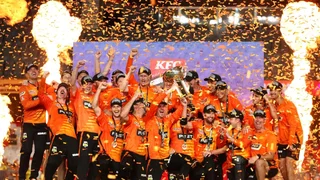
Former England captain Ben Stokes is also expected to return to the BBL. New Zealand batter Finn Allen remains one of the most sought-after overseas players after helping Perth Scorchers win their 6th BBL title last season.
The WBBL market also includes several big names. Australian fast bowler Tayla Vlaeminck is available, while Sophie Devine, Hayley Matthews, and Danni Wyatt-Hodge are also without contracts. Wyatt-Hodge helped Hobart Hurricanes win the title last December.
For local replacement players, BBL clubs can sign replacements only for season-ending injuries, wicketkeeper shortages, or major squad depletion when fewer than 16 contracted players are available. WBBL clubs can sign replacements when fewer than 15 contracted players are available.
Also read: Will Pucovski takes legal action against former school over concussion mishandling