Table of Contents
The International Cricket Council (ICC) has rolled out a number of significant changes to its Playing Conditions. The world governing body has introduced new rules on time-wasting, cricket balls, fielding and other match situations. The changes are intended to speed up the game, make it clearer and be more consistent.
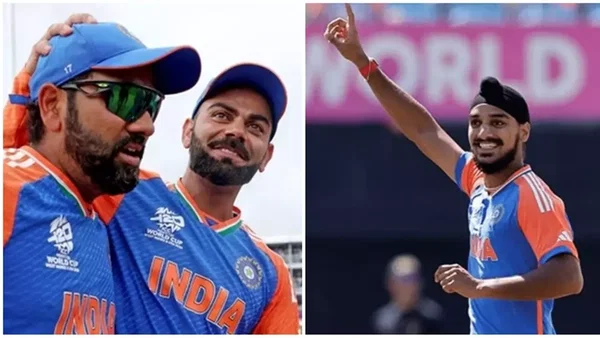
The new rules will come into effect for all international series starting on October 1, 2026, or later. However, series that are already underway will continue under the old rules. Earlier, Rohit Sharma mentions Virat Kohli twice as he builds perfect ODI batter, Hardik Pandya also named.
ICC announces major Playing Condition changes, introduces strict time-wasting rule
The updated playing conditions for both men’s and women’s cricket in all formats are now available in the ICC’s Rules and Regulations section and include changes made to the MCC Laws of Cricket.
One of the biggest changes is related to batters taking too much time before facing the next delivery. If a batter is not ready to face the ball within the allowed time, the first offense will bring a warning.
If it happens again, the batter will receive a final warning. If the batter commits the offense for a third time, the fielding team will get five penalty runs. The same five-run penalty will be given for every further offense. Repeated offenses can also lead to action under the ICC Code of Conduct.
Sourav Ganguly confirms the changes
Sourav Ganguly, the Chair of the ICC Men’s Cricket Committee, said the changes cover important areas such as cricket ball specifications, fielding rules, and measures to improve the pace of the game.
Ganguly said, as quoted by the ICC on its official website, “There are some important changes to the Playing Conditions, including provisions relating to cricket balls, greater clarity around certain aspects of fielding, and measures aimed at improving the pace of the game. These changes have been carefully considered to ensure the playing conditions continue to reflect the needs of the modern game while maintaining its integrity and consistency.”
ICC creates three separate cricket ball standards
The ICC has also introduced tighter limits for the size and weight of women’s cricket balls. Men’s cricket balls already have strict limits on their size and weight. But in women’s and junior cricket, manufacturers have often used one ball for both categories.
But the new rules now create three separate specifications for cricket balls used in men’s, women's, and junior cricket. This means each category will have its own size and weight limits from now.
ICC clears confusion around overthrows
The new playing conditions have also made the meaning of an overthrow much clearer. An overthrow will be considered an attempt to direct the ball towards the stumps to stop runs or complete a run-out.
However, a simple misfield will not be treated as an overthrow, whether the fielder was trying to stop the ball or pass it to another fielder. Amid this, England show hypocrisy as players set to get NOCs for Afghanistan Premier League.
The ‘Ball Settled’ rule changed
The ICC has also given umpires more freedom when deciding whether a ball has finally settled. This can become especially important on the final delivery of a close match.
Under the updated rule, the ball does not necessarily have to be in the bowler’s or wicketkeeper’s hands to be considered finally settled.
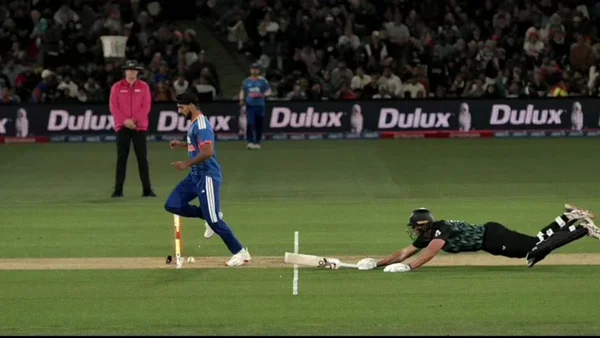
Touching the ball will not be enough for run-outs and stumpings
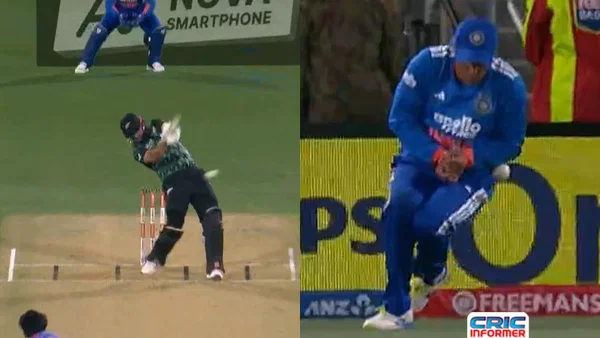
The ICC has also clarified the rule around run-outs and stumpings. A fielder must have complete control of the ball for it to be considered held during a run-out or stumping.
Simply touching the ball with a hand while breaking the stumps will not be enough to establish that the fielder was holding the ball. This clarification will help umpires deal with situations where the ball makes contact with a fielder’s hand but is not actually under their control.
Big changes in Test cricket rule book
ICC introduces Pink ball trial to reduce lost playing time
The ICC will now allow pink balls to be used in daytime Test matches as part of a trial. This decision has been taken to reduce the loss of playing time because of bad light. However, both teams must agree to use the pink ball before the start of the test.
Once the decision has been made, it will remain in place for the entire duration of the Test match. The teams cannot change their decision after the test has started. Switching from a red ball to a pink ball after the match has already begun will also not be allowed.
Final wicket will no longer automatically end Day’s play
Another important change has been made to the end of a day's play in Test cricket. If the final wicket of the day falls during the last over and that over has not been completed, this will not automatically stop the play.
If the weather and playing conditions are suitable, the remaining deliveries must be completed. The new rule will give the fielding team the chance to complete the over and could add more drama to the end of the day's play.
New rules for ODIs & T20Is
T20I innings break fixed at 15 minutes
T20I cricket will now have a fixed 15-minute innings break. But if the playing time has been lost during a match, the inning break can be reduced to a minimum of 10 minutes.
ICC allows head coaches to enter field during drinks break
In a big relief for the teams, the head coach or their designated representative will now be allowed to enter the field during drinks intervals under the new ODI and T20I playing conditions.
This rule has already been implemented in women's cricket wherever applicable.
The Wide Ball rule becomes permanent
The wide-ball rule that was earlier introduced on a trial basis in ODI and T20I cricket has now become a permanent part of the Playing Conditions. The rule was introduced to give bowlers some protection when batters move around before or during a delivery.
Under the rule, the position of the batter's legs at the moment the ball is delivered will be used as the reference point when deciding whether the delivery is wide. This means that if the batter later moves across towards the off side after that reference point, the subsequent movement will not by itself change the wide decision.