Table of Contents
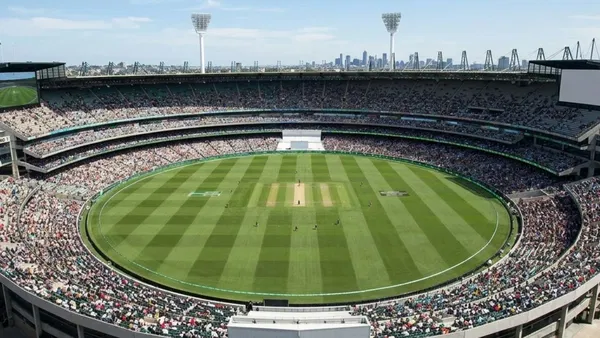
India survived a major scare against Japan in their historic T20I at the Sano International Cricket Ground on Tuesday, September 22. With rain reducing the contest to five overs per side, India were restricted to just 32/4 after being asked to bat first. Japan then came within touching distance of a remarkable victory before finishing on 30/3, with India winning by just two runs.
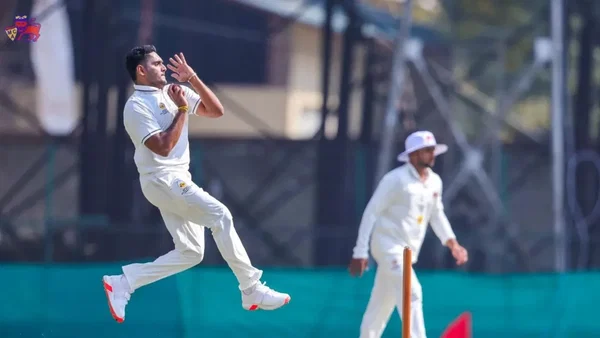
Japan's bowlers produced an impressive performance against the T20 World Cup champions, particularly through the spin of Charlie Hara-Hinze, Ibrahim Takahashi and Benjamin Ito-Davis. India struggled to score freely throughout their innings, while Japan kept the chase alive until the final over. However, Axar Patel held his nerve with the ball as India secured victory in the first-ever men's international meeting between the two teams.
Full details and key moments of India's innings
India had to wait for the rain to clear before the match could begin, with the toss taking place at 3:30pm local time and the game eventually starting shortly after 4pm. With only five overs available to each side, Sanju Samson and Abhishek Sharma opened the batting for India.
Japan made an immediate impact with the ball. Charlie Hara-Hinze kept Samson under pressure during the opening over but the Indian wicketkeeper managed to collect seven runs, including a boundary over the covers. However, the over ended with a major breakthrough as Abhishek Sharma attempted a sweep and top-edged the ball towards short fine leg. He was dismissed for a first-ball duck, leaving India 7/1.
Samson was unable to stay for long either. Ibrahim Takahashi bowled a clever second over and removed the India opener after he tried to attack a flighted delivery and dragged it towards deep midwicket. Samson departed for 9 off seven balls, leaving India 12/2.
Shreyas Iyer then joined Ishan Kishan, but Japan continued to make life difficult. Ishan struggled to find his timing against Benjamin Ito-Davis and eventually attempted to hit a tossed-up delivery down the ground. He failed to get underneath it properly and was caught at mid-off for 3 off six balls.
At 14/3, India were in serious trouble with only two overs remaining. Iyer took responsibility for rebuilding the innings, finding a few gaps and running hard between the wickets. He also produced India's second boundary of the innings in the fifth over when he finally managed to get underneath a delivery from Hara-Hinze and struck it over cover.
Iyer's 16 off 12 balls became India's highest individual score, but even he could not survive until the end. He attempted to clear the fielder at deep extra cover but picked out the man stationed there, giving Hara-Hinze his second wicket.
Shivam Dube faced the final delivery but could not add to India's total. India ended their five overs at 32/4, with Tilak Varma unbeaten on 1 and Dube unbeaten without scoring.
Hara-Hinze finished with two wickets, while Takahashi and Ito-Davis picked up one each. Japan had done almost everything right with the ball, leaving India with a surprisingly modest target of 33.
Full details and key moments of Japan's innings
Japan began the chase knowing that they needed only 33 runs from five overs, meaning the required rate was manageable despite India's strong bowling attack. Axar Patel opened the bowling and immediately created pressure with his spin.
The first over produced only two runs and a wicket. Lachlan Yamamoto-Lake struggled to rotate the strike and was eventually run out while attempting a second run. Ishan Kishan completed the dismissal, leaving Japan at 2/1 after the opening over.
Washington Sundar then took the ball and Japan managed to make better progress. Ibrahim Takahashi found the first boundary of the innings, going down on one knee and hitting Sundar towards the leg side. However, the India spinner responded quickly. Takahashi tried to repeat the shot and was caught in the outfield for 4 off three balls.
Japan were 8/2 after two overs and still required 25 runs from the remaining three overs. Kendel Kadowaki-Fleming then produced a crucial over against Ravi Bishnoi, keeping Japan's hopes alive. He found a boundary through a scoop and picked up additional runs through aggressive running, helping Japan reach 18/2 after three overs.
The equation stood at 15 runs from the final two overs, and Japan were suddenly within realistic reach of an extraordinary upset.
Ito-Davis kept the chase moving against Sundar in the fourth over, collecting several boundaries and twos. Japan reached 25/3 after four overs, requiring nine runs from the final six deliveries.
Washington Sundar had already played an important role with two wickets, but Axar Patel was given the responsibility of bowling the final over. Japan needed to find a boundary while India looked to protect a two-run lead.
Axar conceded a couple of singles but kept the ball away from the hitting zone. Japan also picked up wides, but India maintained control of the equation. With the final delivery, Japan could manage only a single, leaving them at 30/3.
Kadowaki-Fleming top-scored with 12 off 12 balls, while Ito-Davis remained unbeaten on 9. Japan ultimately fell just two runs short of India's 32/4.
Key stats from India vs Japan T20I
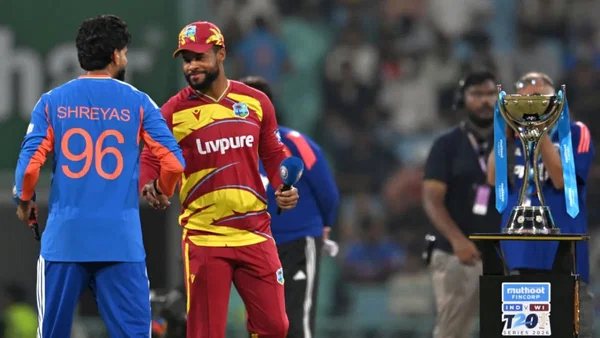
Shreyas Iyer created a unique record during the historic contest. He became the first captain from a Full Member side to choose to bat first in a five-overs-a-side T20 International.
Charlie Hara-Hinze also entered the record books as the youngest player to feature in a T20I against India among the players listed in the match records. At 17 years and 357 days, he was younger than Nepal's Gulshan Jha, Namibia's Max Heingo, Afghanistan's Noor Ahmad and Zimbabwe's Tendai Chatara.
India's match against Japan also took their number of different opponents in men's T20Is to 20. Zimbabwe have faced the most different Full Member opponents at 32, followed by Ireland with 27. Pakistan and Bangladesh have faced 21 each, while New Zealand and Afghanistan have played against 19 different opponents.
Abhishek Sharma equalled an unwanted T20I record after being dismissed for a first-ball duck. He now has seven ducks in T20Is in 2026, matching the calendar-year record for most ducks alongside Zappy Bimenyimana in 2023, Orchide Tuyisenge in 2023 and Saim Ayub in 2025.
Abhishek also moved to the top of another unwanted list in all T20 cricket. His first-ball dismissal took his tally to 10 ducks in 2026, the most by any player in a calendar year. Rashid Khan had previously recorded nine ducks in 2019, while Shadab Khan also managed nine in 2024.
Also, India's top three also produced an unwanted statistical milestone. Samson, Abhishek and Ishan combined for only 12 runs, the fewest aggregate by India's top three in a T20I against an Associate nation. The previous lowest total was 21 against the USA at Wankhede in 2026.
Meanwhile, India became the first team to register 200 wins in T20 Internationals with their victory over Japan.
Also Read: Abhishek Sharma bags golden duck vs Japan, surpasses Rohit Sharma’s unwanted record