Table of Contents
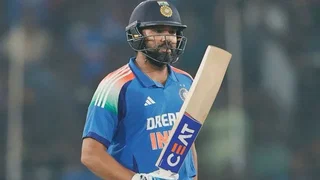
Rohit Sharma ODI return 2026 is now official after the veteran opener received fitness clearance from the BCCI's Centre of Excellence (CoE) ahead of India's ODI series against Afghanistan, starting on June 13. Rohit Sharma had not played an ODI since India's home series against New Zealand in January and spent the last few months recovering from the hamstring injury he suffered during IPL 2026.
His return is significant for reasons that go beyond three matches against Afghanistan. With the 2027 ODI World Cup slowly coming into focus, India have entered a crucial phase where every series will help shape the long-term batting order, leadership structure and squad planning. Rohit's comeback could provide immediate stability, but it also raises important questions about India's future direction.
What kept Rohit Sharma out? The hamstring timeline
Rohit Sharma's absence was triggered by a hamstring injury suffered during IPL 2026 while representing the Mumbai Indians. The injury disrupted his campaign and forced the franchise to manage his workload carefully during the latter stages of the tournament.
Even when Rohit returned to action, he featured primarily as an Impact Substitute rather than taking the field for the entire match. That immediately raised concerns about whether he would be ready for international cricket in time for the Afghanistan ODI series.
The BCCI subsequently included him in the squad, subject to a fitness clearance from the Centre of Excellence in Bengaluru. Over the past few weeks, Rohit Sharma underwent rehabilitation and fitness assessments under the supervision of the board's medical staff.
The CoE clearance is more than a routine formality. Under the current setup, players returning from significant injuries must satisfy strict benchmarks before being allowed back into international cricket. The process is designed to ensure players are physically capable of handling the demands of elite cricket and reduce the risk of recurring injuries.
Fitness standards have become increasingly important under Gautam Gambhir's management era. India have placed greater emphasis on availability, workload management and fielding standards, particularly with an eye on major ICC events.
That is why Rohit's clearance carries weight. It confirms that the management believes he is ready not only for Afghanistan but also for the ODI cricket that lies ahead over the next 18 months.
Rohit Sharma's ODI form before the injury
The debate around Rohit's return would look very different if he had been struggling for runs before the injury. However, his ODI numbers suggest otherwise.
In his last 10 ODI innings, Rohit scored 485 runs at an average of 48.50. He registered one century and four half-centuries during that period, underlining his continued value at the top of the order.
His standout innings came against Australia in Sydney when he remained unbeaten on 121. He also produced scores of 76 against New Zealand, 73 against Australia, 57 against South Africa and 75 against South Africa.
There were a few failures as well, including scores of 8, 14, 11 and 24, but overall the returns were strong enough to justify his immediate comeback.
The strike rates tell an interesting story, too. Rohit continued to balance aggression with responsibility, maintaining the attacking approach that has defined India's ODI batting over the last few years.
This is why India are not selecting him purely on reputation. The numbers indicate that he remains one of the team's most productive ODI batters when fit.
At the same time, reputation undoubtedly helps. Rohit Sharma's experience, leadership qualities and record in ICC tournaments make him difficult to replace overnight. India's challenge is finding the right balance between rewarding current performance and planning for the future.
The batting order question: Who opens with Rohit Sharma?
Rohit Sharma's return immediately places the spotlight on India's ODI batting order 2026. Shubman Gill is expected to continue as Rohit's opening partner. Gill has established himself as India's premier ODI batter over the last few years and now enters the Afghanistan series as captain.
The bigger question revolves around Yashasvi Jaiswal. Jaiswal has emerged as one of India's most exciting batting talents, but Rohit's availability could force him into a different role or even out of the first-choice XI, depending on the combination India prefer.
Shreyas Iyer appears locked in at No. 4 after becoming one of India's most reliable middle-order players, while KL Rahul remains the frontrunner for the No. 5 role because of his ability to balance wicketkeeping duties with batting responsibility.
Jaiswal's value is highest as an opener, and India will eventually need to decide whether he fits naturally at No. 3 or whether Gill could shift positions in the future. Those are decisions that may define India's ODI World Cup 2027 squad planning.
India's Probable Playing XI vs Afghanistan
| Position | Player | Role |
| 1 | Rohit Sharma | Aggressive opener |
| 2 | Shubman Gill (c) | Opening batter |
| 3 | Yashasvi Jaiswal | Left-handed top-order batter |
| 4 | Shreyas Iyer (vc) | Middle-order anchor |
| 5 | KL Rahul (wk) | Wicketkeeper-batter |
| 6 | Nitish Kumar Reddy | Batting all-rounder |
| 7 | Washington Sundar | Spin-bowling all-rounder |
| 8 | Kuldeep Yadav | Wrist-spinner |
| 9 | Arshdeep Singh | Left-arm seamer |
| 10 | Prasidh Krishna | Fast bowler |
| 11 | Prince Yadav/Gurnoor Brar | Pace option |
What Rohit Sharma's return means for World Cup 2027 planning
This is where the Rohit Sharma ODI return 2026 becomes truly important. India still have roughly 18 months to finalize their plans for the 2027 World Cup. That gives the selectors enough time to evaluate combinations, but not enough time to postpone difficult decisions.
Rohit remains one of India's best ODI batters, and his recent record supports continued selection. However, age and workload management will inevitably remain factors. By the time the World Cup arrives, he will be approaching 41.
Meanwhile, Gill continues to grow as both a batter and captain. Jaiswal is pushing hard for a permanent place at the top of the order. Several younger players are also competing for opportunities in the middle order.
That means Rohit's place cannot simply be guaranteed based on past achievements. The reality is that India need him right now. His experience, ability to handle pressure and proven record in major tournaments still make him a valuable asset. But the next 18 months will effectively serve as an extended audition for everyone, including Rohit.
If he continues producing runs and stays fit, there will be little reason to leave him out. But if injuries begin to interrupt his availability, India may accelerate the transition toward a younger batting core.
The Afghanistan series therefore, represents more than just another bilateral assignment. It is an early glimpse into how India want to construct their batting order for the biggest ODI tournament on the horizon.
In the short term, Rohit's return strengthens India considerably. However, in the long term, the bigger story is how India build a batting unit capable of winning the 2027 World Cup. Every selection decision from this point onward will be viewed through that lens.